The Vineyard
Kedros.
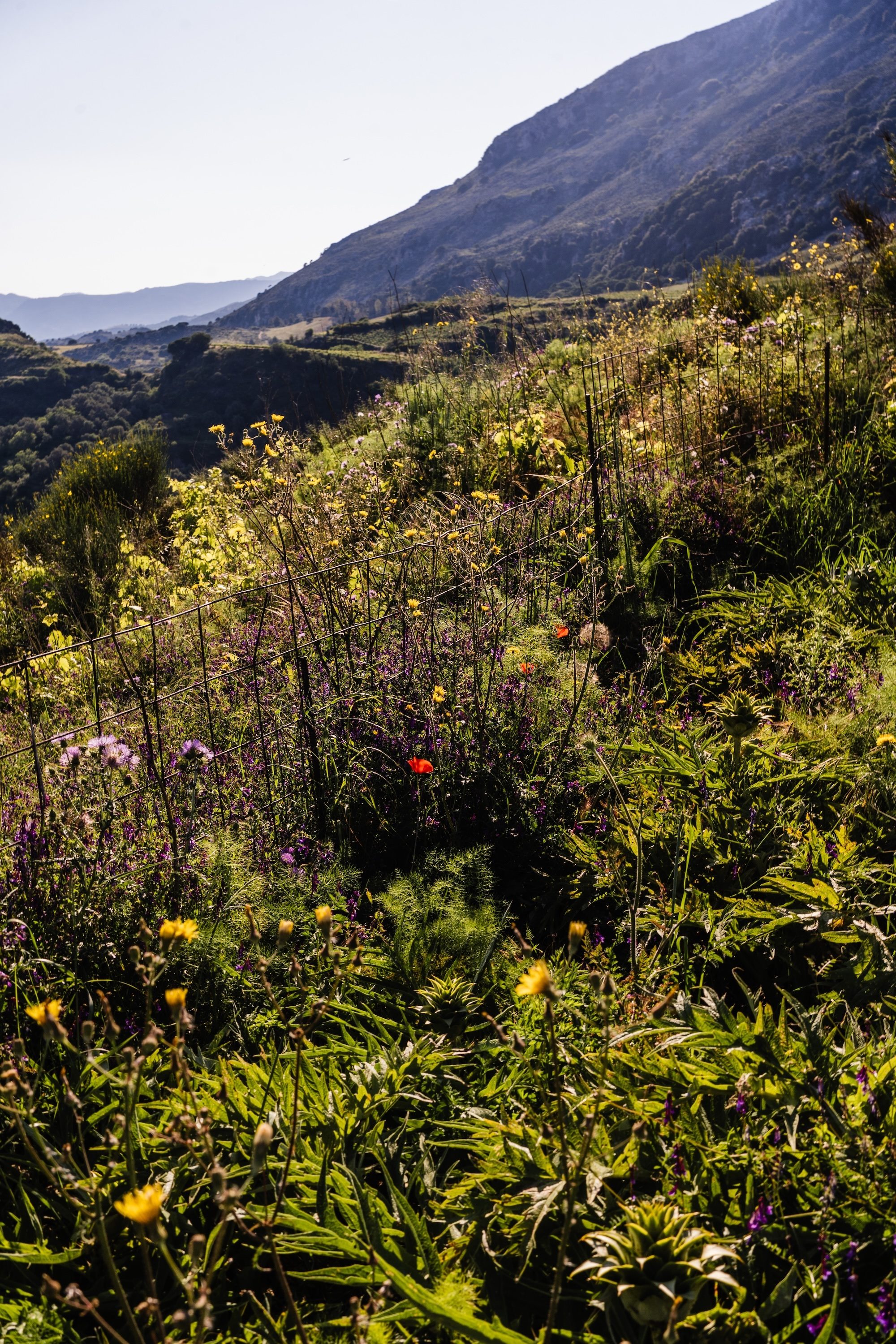
A single parcel on the slope of Mount Soros, the highest range in Rethymno. Six hundred and fifty metres above the south coast of Crete. Stony, exposed, slow.
Elevation
Six hundred and fifty metres of cold air.
Most Cretan vineyards sit on the coast, between sea level and three hundred metres. Ours is more than twice as high, and the difference shows up in the wine: the days warm slowly and the nights stay cold, even in August. The vines hang their fruit into September while the coastal sites are already pressing.
The trade-off is a shorter growing season and lower yields. We accept it. What we get back is acidity, aromatics, and time.
Soils
Stones, more stones, a thin layer of clay.
The Kedros range is limestone over schist; the parcel sits on a weathered tongue of that geology. Drainage is severe. The vines have had eleven years to push their roots down through it. They have found what they needed.
Vines
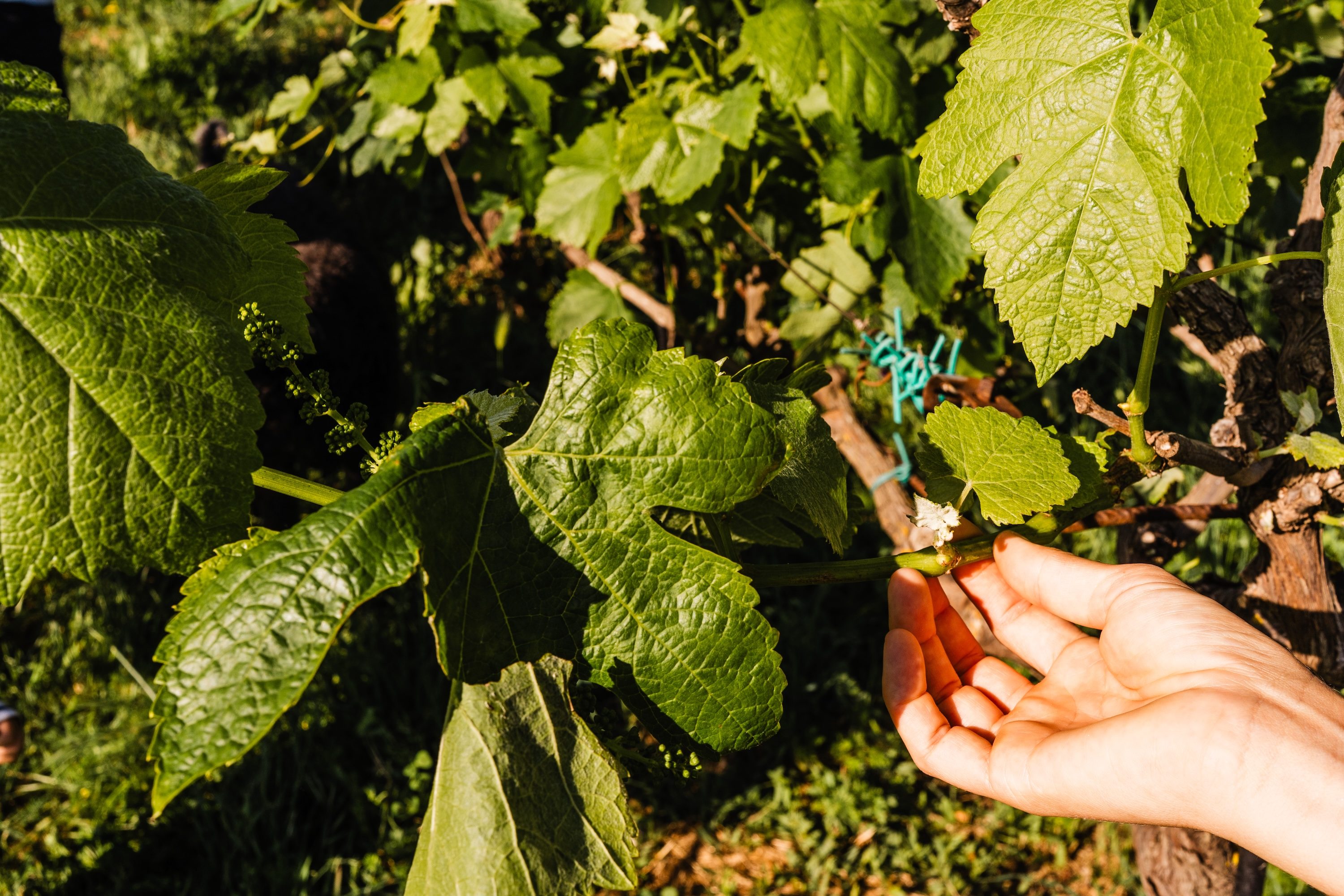
Just under an acre. Roughly two hundred and forty plants.
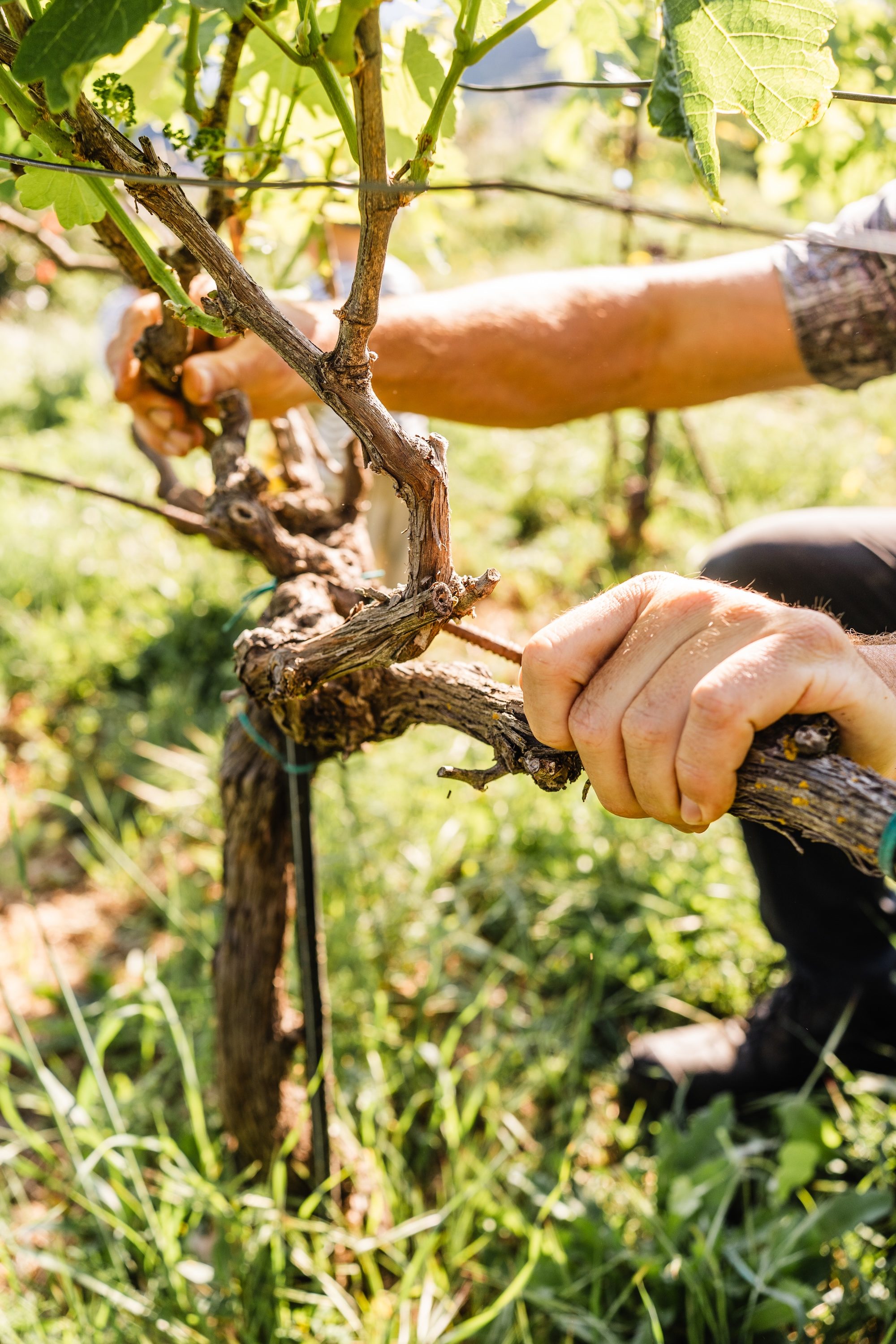
Twelve rows on the contour. Half Shiraz, a quarter Cabernet Sauvignon, a quarter Merlot — the planting ratio settled in 2014, the year the vines went in the ground. Most of them are still here. Some are not. The dead vines get scratch-tested in February. If the cambium is dry they come out and are replaced with hardwood cuttings from the neighbours.
Practice
Organic since planting. No synthetic input has ever touched the site.
Powdery mildew is the disease pressure here, and we manage it the way our grandparents would have: wettable sulphur on a dry morning, every ten to fourteen days from budburst until the fruit colours up. Canopy management for airflow. Cut-and-drop pruning so the biomass returns to the soil. Cover crops between the rows.
We follow the biodynamic calendar for pruning and racking, not as dogma, but because the rhythms work and the wines that result are better for it.
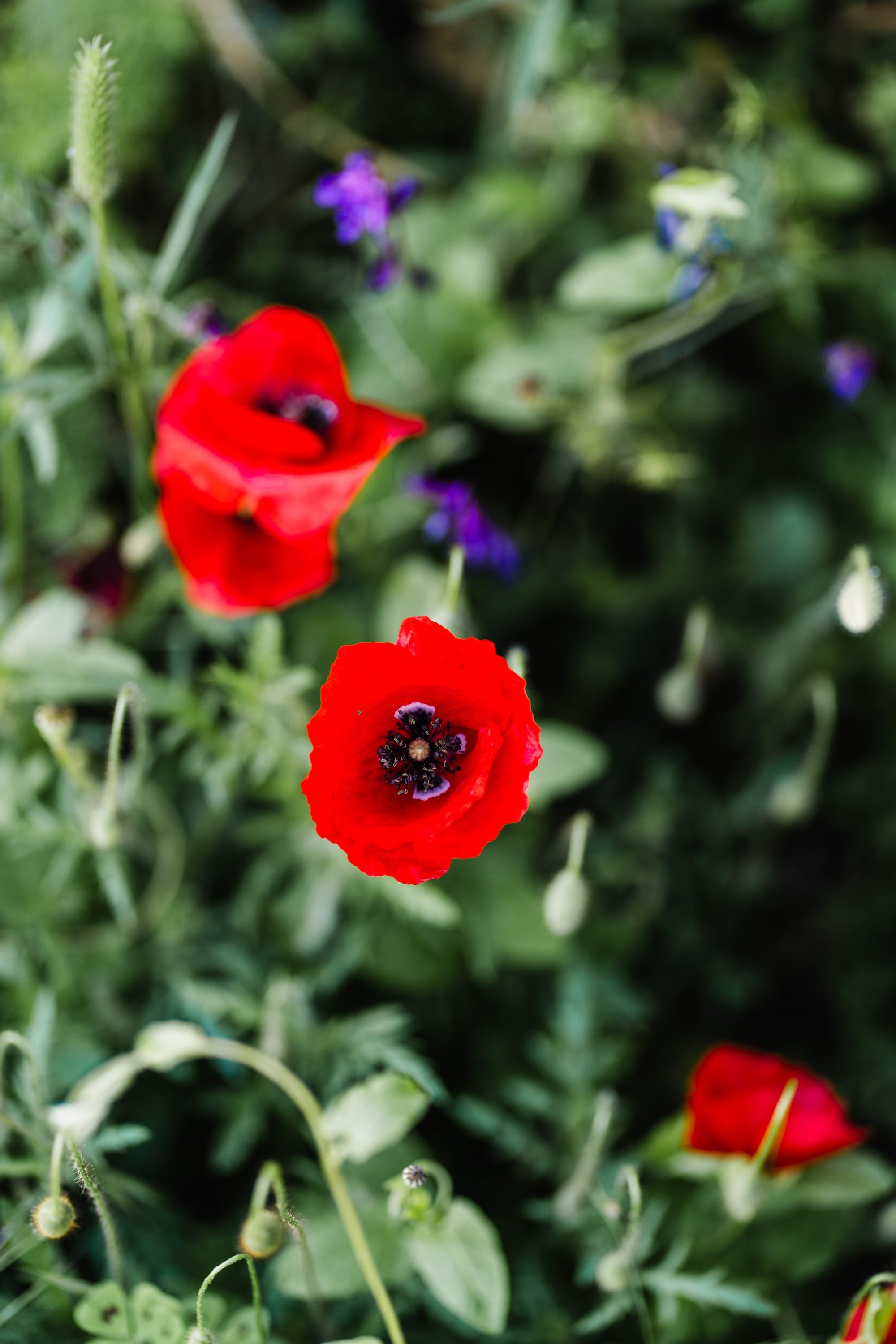
A biodiverse understorey — wildflowers, cover crops, insects — is the surest visible sign that no synthetic chemistry touches the site.
Water
A four hundred and eighty litre tank, drip irrigation, and the rain.
Crete is a dry place. Even at 650 metres a midsummer week without rain will stress eleven-year-old vines. We installed deep poly pipes at every plant to deliver water directly to the root zone, supplemented by drip lines on a solar timer. The aim is enough water to keep the vines healthy and not a drop more. Stressed vines make better wine, up to the point where they don't.
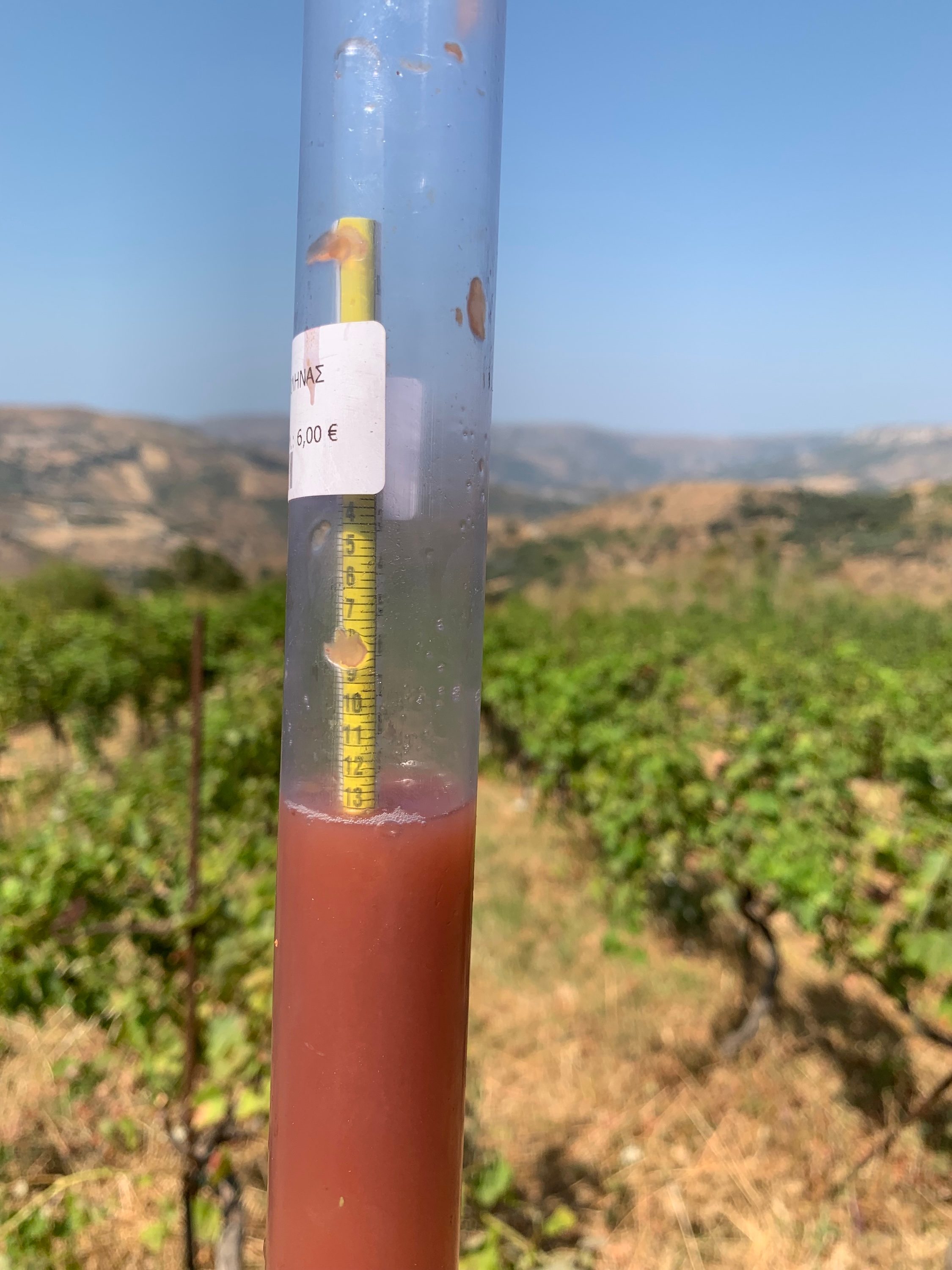
The moment
Every vintage comes down to a decision made in the field.
A refractometer, a hand-crushed berry, a reading in the sun. Numbers on a small yellow scale, checked against the taste of the fruit and the feel of the season. When it is time, it is time. Kairos.